

What if the heavy-duty steel container you’ve hired to protect your belongings is actually the biggest threat to them? It’s a common fear for anyone using outdoor storage in the UK, especially when the winter rain sets in and metal boxes start to “sweat.” You’ve likely spent hours worrying about your furniture warping or your business stock smelling of mildew. We understand that anxiety; nobody wants to open their unit only to find a damp mess.
The good news is that keeping your items safe is entirely manageable with the right approach. Understanding how to prevent damp in storage container units isn’t about luck; it’s about a three-pillar system of item preparation, airflow physics, and professional desiccants. This guide will give you the confidence to store anything safely. We’ll provide a clear list of affordable supplies, such as Dampsticks or Absorpole units, and a packing strategy that ensures moisture never stands a chance. From preparing your goods to choosing the right moisture traps, here is everything you need to keep your storage bone-dry.
Key Takeaways
- Understand the science of “Container Breath” to learn effectively how to prevent damp in storage container units during the UK’s humid winters.
- Follow the “Dry-In” rule by ensuring all items are 100% dry and cleaned at least 48 hours before they enter your storage unit.
- Master packing techniques like the “Chimney Effect” to create vital airflow between your belongings and the container walls.
- Choose the right moisture control tools, such as hanging desiccant poles, which are specifically designed for the high-volume needs of shipping containers.
- Learn why coastal locations like Portsmouth require extra vigilance and why a maintenance visit in January or February is essential.
Why Do Storage Containers Get Damp? Understanding ‘Container Breath’
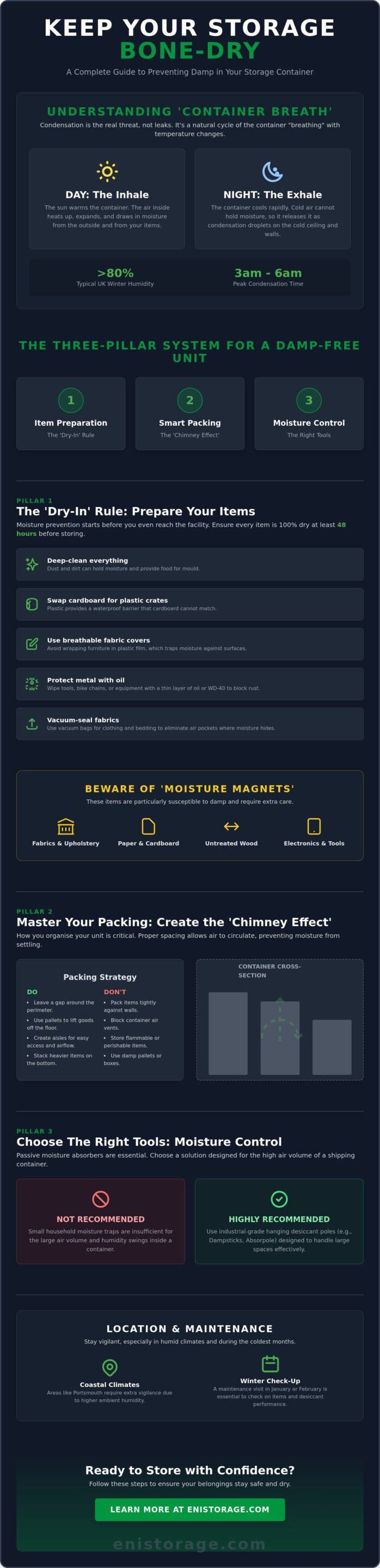
If you have ever opened a storage unit to find droplets of water clinging to the ceiling, you have seen “container breath” in action. It is not a leak in the roof; it is a natural physical process called condensation. This happens when warm, moist air inside the unit touches the cold metal walls or ceiling. Because cold surfaces cannot hold as much moisture as warm air, the water turns from an invisible gas into liquid droplets. Understanding this cycle is the first step in learning how to prevent damp in storage container units effectively.
Think of your container as a living thing that “breathes” with the weather. During a typical British day, the sun warms the steel, heating the air inside. This warm air expands and “inhales” moisture from the environment or from the items you have stored. As night falls and the temperature drops, the container “exhales.” The air cools rapidly, and because cold air holds less water, it dumps that moisture onto the nearest cold surface. This is why your belongings can feel damp even if the unit is perfectly watertight.
Three main culprits drive this moisture build-up. First, the ambient humidity of the UK’s maritime climate. Second, moisture trapped within your items, such as a sofa that was slightly damp when moved. Third, the sharp temperature fluctuations between day and night. Understanding Damp Proofing principles shows us that without a way to manage this air, moisture is almost guaranteed to settle on your goods.
The Role of Relative Humidity in the UK
The UK is naturally humid, especially during the autumn and winter months. Our humidity levels often soar above 80%, meaning the air is already heavy with water before it even enters your unit. This “sweating” usually peaks in the early hours of the morning, between 3 am and 6 am, when the steel is at its coldest. It is vital to distinguish this from external rain. Rain stays outside, but humidity is an invisible guest that enters every time you open the door.
Identifying Moisture-Sensitive Items
Some items are “moisture magnets” that will actively pull water out of the air. These include:
- Fabrics and Upholstery: Sofas, mattresses, and clothes can hold onto dampness, leading to musty smells.
- Paper and Cardboard: Important documents or cardboard boxes can soften and grow mould.
- Untreated Wood: Furniture can warp or develop surface mildew if the air stays stagnant.
- Electronics and Tools: Metal surfaces are prone to rust and corrosion when condensation settles on them.
Thermal bridging is the primary cause of roof drips, occurring when the cold external temperature travels through the metal skin to meet the warmer air inside.
The ‘Dry-In’ Rule: How to Prepare Your Items for Storage
Preventing moisture starts long before you reach the facility. If you bring damp items into a sealed unit, you are essentially inviting mould to grow. The “Dry-In” rule is simple: everything must be bone-dry before it crosses the threshold. Clean your items thoroughly to remove organic matter, then let them air out for at least 48 hours in a dry room. This is a vital step in how to prevent damp in storage container environments because even a slightly damp cloth can release enough moisture to raise the humidity levels inside. If you are preparing for a transition, our household storage solutions work best when these preparation steps are followed strictly.
Follow these five steps to ensure your goods stay in peak condition:
- Step 1: Deep-clean every item. Dust and dirt can hold moisture and provide a food source for mould.
- Step 2: Swap cardboard boxes for plastic crates. Plastic provides a waterproof barrier that cardboard simply cannot match.
- Step 3: Avoid wrapping wood or leather furniture in tight plastic film. This traps moisture against the material; use breathable fabric covers instead.
- Step 4: Wipe down metal tools, bike chains, or garden equipment with a thin layer of oil or WD-40 to block oxidation.
- Step 5: Use vacuum-seal bags for clothing, curtains, and bedding. This eliminates air pockets where moisture can hide.
The Danger of Damp Pallets and Cardboard
Many people use wooden pallets to keep their goods off the floor. However, if that pallet has been sitting outside in the rain, it will act like a giant sponge. Bringing a soggy pallet into your unit is a recipe for disaster. If you must use them, only source dry, heat-treated pallets (marked with the HT stamp). Similarly, limit your use of cardboard. Experts in managing condensation often point out that porous materials like cardboard will pull moisture from the air and hold it against your belongings, eventually softening and collapsing.
Preparing Furniture and Appliances
White goods are the most common source of “hidden” moisture. You must defrost fridges and freezers for at least 72 hours before moving them. Simply wiping them out is not enough; the internal pipes must be dry. Ensure washing machine hoses are completely drained and left to air out. If you are storing garden machinery, never leave a lawnmower with wet grass clippings in the box or fuel in the tank. These organic materials break down and release moisture, which quickly turns into a damp problem for everything else in the unit.
Organising Your Unit: Packing Techniques for Maximum Airflow
Once your items are dry and packed, the way you arrange them inside the unit determines whether they stay that way. Stagnant air is the primary enemy of a dry storage environment. When air cannot circulate, moisture pockets form, leading to the musty smells and mildew you want to avoid. Learning how to prevent damp in storage container units requires a shift in mindset; don’t think about how much you can fit in, but how much air you can let move around. When you understand the science, as explained in this technical guide to condensation, you see that airflow is your best defence against the UK’s high humidity.
One of the most effective strategies is the “Chimney Effect.” By leaving a consistent gap between your belongings and the container walls, you allow air to move vertically. As the steel walls change temperature, the air near them moves; if you block this with boxes, moisture gets trapped against the steel. We recommend creating a central aisle. Instead of packing the unit solid from back to front, leave a walkway down the middle. This allows air to flow from the vents at the top of the container all the way to the back wall, ensuring no corner remains “dead” or unventilated.
Wall and Floor Clearance Strategies
The 2-inch rule is a simple but powerful standard for any outdoor unit. Always leave at least 5cm (2 inches) of space between your goods and the side walls. This is especially important in the corners of the container. Corners are the highest risk areas for mould because they are “cold spots” where thermal bridging is most intense. If you push a fabric sofa directly into a corner, it will almost certainly pull moisture from the cold steel.
Lifting your goods off the floor is equally vital. The metal floor of a container is the coldest part of the unit. Use “dunnage” such as plastic racking, dry pallets, or even simple timber runners to create a gap. This prevents “rising damp” from condensation that might settle on the floor. Plastic racking is a fantastic choice for business storage because it is non-porous and won’t hold moisture like wood might.
Stacking for Stability and Ventilation
When stacking your items, follow a logical order. Place heavy, non-porous items like plastic crates or metal bed frames at the bottom. Save the top of the stacks for lighter, porous items like vacuum-sealed bedding or clothes. It’s crucial that you never stack items right up to the ceiling. Most shipping containers have small vents located near the roof line; if you block these with boxes, you stop the unit from “breathing.” In this storage context, air is an insulator that prevents the cold from the steel walls transferring directly into your delicate fabrics. Leave at least a foot of clearance at the top to keep the air moving freely.
Moisture Control Tools: Desiccants, Poles, and Absorbers
While correct packing and airflow create a strong foundation, active moisture removal is your final line of defence. In the UK’s humid climate, rely on chemical desiccants to “mop up” any remaining water vapour in the air. Not all absorbers are equal. You have likely seen small packets of silica gel in shoeboxes, but these are far too small for a shipping container. For large spaces, calcium chloride is the superior choice. It can absorb several times its own weight in water, making it the most effective tool for anyone learning how to prevent damp in storage container units during a wet British winter.
The industry standard for outdoor units is the “Damp Pole” or hanging desiccant. These long, slim units hang from the internal lashing rings of the container, keeping them out of the way of your boxes. Unlike cheap supermarket moisture traps that can easily tip over and spill corrosive liquid, professional poles are designed to be leak-proof. They pull moisture from the air and store it safely in a reservoir or turn it into a thick gel. If you are storing stock for your company, our business storage provides the perfect secure space to implement these professional techniques.
Avoid the “Cat Litter” myth. Some online forums suggest placing trays of cat litter or bowls of salt around your unit. These DIY solutions fail quickly because they have a very low saturation point. Once they have absorbed a tiny amount of moisture, they stop working and can actually become a source of dampness themselves. Stick to professional-grade products to ensure your belongings remain bone-dry.
Professional Grade Desiccants
Products like “Cargo Dry” bags or “Dampsticks” are specifically engineered for the high-volume needs of a metal container. They work silently to lower the relative humidity inside the unit. For a standard 20ft container, we recommend using at least 4 poles. Space them evenly along the side walls to ensure the entire unit is covered. Establish a “Winter Check” schedule; visit your unit once a month between November and March to see if the absorbers are full. If the gel has reached the maximum line, replace the unit immediately to maintain protection.
Refurbishing and Reusing Desiccants
If you use silica gel sachets inside individual plastic crates, you can often “recharge” them. Placing them in a domestic oven at 100°C to 120°C for a few hours will drive out the moisture, making them reusable. However, calcium chloride poles are disposable and cannot be recharged. While the initial cost of professional poles is higher than supermarket tubs, the cost-benefit is clear: a £25 pole can protect thousands of pounds worth of furniture. Finally, remember that active electric dehumidifiers are rarely suitable for outdoor containers. Most units lack a power supply, and without a constant drain, a dehumidifier will simply stop working once its small tank is full.
Managing Your Storage Unit in Portsmouth’s Coastal Climate
Living by the Solent brings beautiful views, but it also presents unique challenges for storage. Portsmouth’s coastal air is naturally saltier and more humid than inland areas like Winchester or Basingstoke. Salt is hygroscopic, meaning it actively attracts water molecules from the atmosphere. This makes the question of how to prevent damp in storage container units even more pressing for local users. If salt-laden moisture settles on metal tools or bike chains, the risk of corrosion increases significantly. Our Farlington facility is specifically laid out to manage these coastal conditions, with a site design that maximises natural drainage to keep the ground around your unit clear of standing water.
We recommend a proactive approach during “The Big Thaw” in January and February. These months often see the sharpest temperature swings, leading to increased condensation inside metal units. Because we provide 24/7 access, you can check your belongings whenever it’s convenient. It’s a good idea to visit after a heavy South Coast storm to ensure your desiccant poles are still working effectively and your items remain dry. This flexibility gives you peace of mind that your goods are protected regardless of the British weather.
The Portsmouth Humidity Factor
Coastal locations consistently see higher average relative humidity because of the proximity to the sea. For those using our boat storage, this is a critical factor. Sails, life jackets, and cabin cushions are particularly vulnerable to sea air. Never store these items whilst they are still salty; the salt will trap moisture even in a well-ventilated unit. Always rinse them with fresh water and dry them completely first. Interestingly, the local sea breeze can be your friend. If you ensure your container’s vents are kept clear of boxes, the moving air outside helps the unit “breathe” more effectively, naturally reducing the risk of stagnant air pockets.
The ENI Storage Advantage
Choosing a locally managed, independent site makes a real difference. At ENI Storage, Andy and Tony are on-site regularly. They keep a close eye on the facility’s condition and ensure the environment remains clean and well-maintained. This personal touch is something you won’t find at large, faceless corporations. Whether you are storing sensitive business storage stock or household furniture, you can trust that our high-security containers are up to the task. We pride ourselves on being a reliable local guide for all your storage needs. Ready for a dry, secure space? Contact Andy and Tony at ENI Storage today.
Protect Your Belongings for the Long Term
Keeping your items bone-dry in a shipping container is a science, not a gamble. By following the “Dry-In” rule and arranging your unit for maximum airflow, you have already won half the battle. Adding professional-grade desiccant poles provides that final layer of security against the UK’s high humidity. Understanding how to prevent damp in storage container units ensures your furniture, business stock, or boat equipment remains in showroom condition. It turns a potentially anxious transition into a simple, managed experience.
At ENI Storage, we are here to support you. Our Farlington site is independently operated by Andy and Tony, who are always on hand to offer expert advice on moisture control. With 24/7 secure access, you can check on your belongings whenever you like; this gives you total peace of mind regardless of the weather. We pride ourselves on being a reliable local guide for all your storage needs, ensuring your journey is streamlined and stress-free.
Get a Quote for Secure, Dry Container Storage in Portsmouth
Your transition doesn’t have to be a source of worry. With the right preparation and a reliable local partner, your items will stay safe, dry, and ready for use whenever you need them next.
Frequently Asked Questions
Is it safe to store a sofa in a shipping container?
Yes, storing a sofa is perfectly safe if you follow the “Dry-In” rule. Ensure the fabric is 100% dry before moving it into the unit. Don’t push the sofa against the metal walls; leave a 2-inch gap for airflow. Using a breathable fabric cover instead of plastic wrap prevents moisture from being trapped against the upholstery, which is a key part of how to prevent damp in storage container units.
How often should I check my storage container for damp?
Visit your unit once a month during the winter months from November to March. This is when temperature fluctuations are most extreme in the UK. During the summer, a check every three months is usually enough. Our 24/7 access in Farlington makes it easy to pop in after a heavy storm to ensure your moisture absorbers aren’t full and your items remain in top condition.
Do I need to leave the vents open in my storage container?
Always keep the vents clear to allow for natural ventilation. These small openings are designed to let the container “breathe” and help equalise the internal and external temperatures. If you block them with boxes or furniture, you create stagnant air pockets where condensation is likely to form. Proper ventilation is a simple but effective way to manage the internal climate without any extra cost.
Can I use a plug-in dehumidifier in an ENI Storage container?
No, plug-in dehumidifiers are not suitable for our outdoor containers as there is no on-site power supply. Additionally, they require a constant drain for the water they collect. Instead, we recommend using professional-grade calcium chloride desiccant poles. These work silently and effectively without needing electricity or manual draining, making them much more reliable for long-term storage in an unpowered unit.
What is the best moisture absorber for a 20ft shipping container?
Calcium chloride poles, such as Dampsticks or Absorpole, are the industry standard for a 20ft shipping container. You should use at least four poles spaced evenly along the walls for maximum coverage. These professional tools are far more effective than supermarket moisture traps because they turn water vapour into a gel. This prevents spills and allows them to absorb much higher volumes of moisture over several months.
Will my clothes smell musty after being in container storage?
Your clothes will stay fresh if you use vacuum-seal bags to eliminate air and moisture before storing them. Avoid using cardboard boxes for fabrics, as cardboard can pull moisture from the air and hold it against your garments. If you pack items correctly and use desiccants, you won’t have to worry about musty smells. Learning how to prevent damp in storage container environments ensures your wardrobe stays as fresh as the day you packed it.
Does the colour of the container affect the amount of condensation?
Yes, the colour of the container impacts the internal temperature and condensation levels. Darker colours like dark blue or green absorb more solar heat during the day. This creates a larger temperature drop at night, which can lead to more “sweating” on the internal walls. Light-coloured containers stay cooler and experience less extreme temperature swings. This naturally reduces the risk of dampness settling on your belongings.
Can I store electronic equipment in an outdoor container during winter?
Storing electronics in an outdoor unit during winter is possible but requires extra care. Condensation can settle on internal metal components, leading to rust or short circuits. Keep these items off the floor on plastic racking and place silica gel packets inside their boxes for targeted protection. For highly sensitive or valuable equipment, checking the unit frequently is essential to ensure moisture levels remain low and your gear stays safe.